
One month, then the next
Updated
A month is the announced turn in Hollywood Agent. The studio's game page lists the turn length as one month and the operating line as "One month per turn, no time pressure." Steam's about text opens the same way: every month, your decisions shape your clients' careers and your agency's future. The game is still unreleased, so this is the shape the studio has described, not a diary of a finished run. The release plan is the page for whether you can play it. You cannot, as of 20 November 2026.
The official page stacks the month as six beats: spot the talent, negotiate the contract, train your clients, win the part, face the reviews, become a powerhouse. Steam uses five headings for the same career and then a features list. The beats below follow the studio's order and stay inside what those pages actually say. Signing and training and casting and reviews go deeper on the people and the jobs. Money and offices is the ledger that can end the game.
Spot the talent
New actors apply every month, and scouts find more prospects. The studio's discover text gives each actor skills, a background, languages, accents, and a personality, and it says your job is to spot potential before anyone else does. Steam adds home country, special abilities, career ambitions, personal preferences, and roles they refuse to take. The English Talent screenshot labels the board Applications, Scouting, and Poaching, and its own line says applicants start few and little-known, with more and better ones as reputation grows. Some attributes on those cards are marked unknown. Treat the names on the cards as examples in the store images. The signing page covers the offer buttons those cards show.
Negotiate, then train
Negotiation is one offer at a time. Push too hard and the actor walks. Offer too much and the margin shrinks. Rival agencies already represent some of the best people, so a buyout is the announced way in, and those rivals can buy your clients out in return. Steam calls the same talks round-by-round negotiation of talent contracts, studio fees, and profit participation.
Training spends points on specific skills, hires specialized coaches, and sends actors on courses. Costs rise as skills improve. The studio tells you to talk to clients, respect their preferences, and watch mood, because neglected clients become difficult. Steam adds that ambitions change as actors age and react to how you treat them. The Training screenshot shows an Actors tab, skill boxes, a coach-limit state, and a row paused with no experience because of a shoot, an injury, or an appointment. That pause is visible in the image. It is part of the announced training pressure, described in full on the signing page.
Win the part, then face the reviews
Studios announce films, TV series, and animated features, with premises, posters, genres, and open roles. You match actors to parts, schedule auditions, and read a casting report after each one. Landing the role opens a choice the studio states plainly: negotiate the fee, or take a share of the profits instead of more money up front. The English Castings board is a cork wall of those offers, with Decline on the cards and tabs for offers, role search, submissions, and results. A film file, such as the Unbought page in the screenshots, pairs a painted poster with the role cards.
When the production releases, box office, ratings, press reviews, and an individual performance review decide what happens next. Hits build fame and star power and unlock bigger roles, better deals, and new talent who want to join. Then the next month begins. The Premiere screenshot is that report: a month name, an income line, a Cast stamp, and telegrams for a scandal and a career beat. Separate film and TV award seasons are on the feature list. So are scandals, crises, and rival agencies that fight you for roles and try to poach.
Close the month
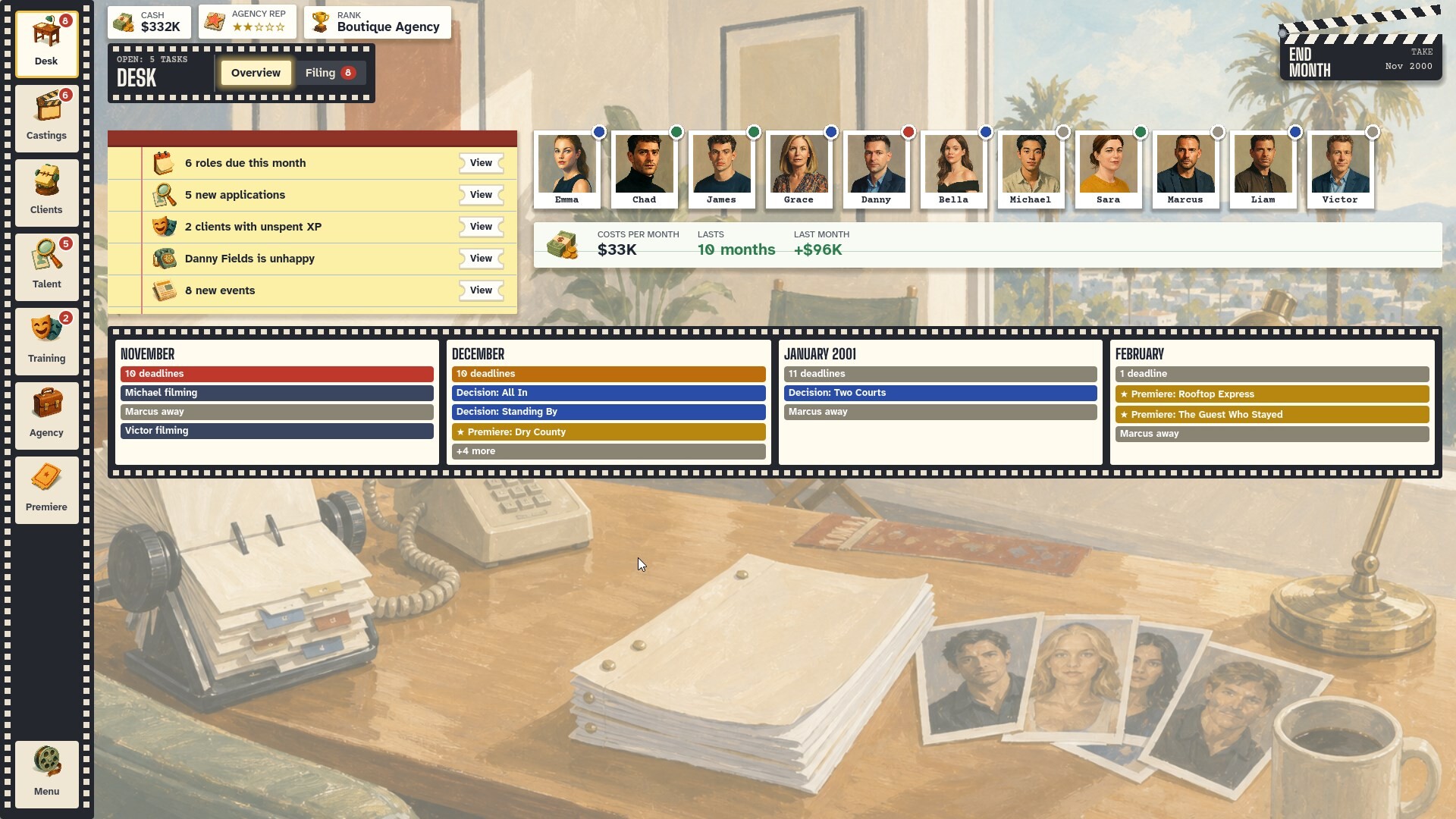
The screenshots put an End Month clapper in the corner, dated November 2000 on the English set. The desk calendar already shows work stretching into later months, with filming, decisions, premieres, and travel blocked onto future columns. That is the picture of a turn that commits you past the current month. The studio's rise beat is the long version: win film and TV awards, climb ranks, and move into bigger offices, starting from a rented back room. Steam says the same climb as agency progression from a small office up through Hollywood's ranks.
Two rules sit under every beat. There is no time pressure inside the month. And the money rule is absolute in the studio's words: run out of money and it is game over. Difficulty runs from a relaxed career to an unforgiving business, so the same month can be tuned. Neither slider is a substitute for a released build. When a demo exists, the release plan is where that fact will have to match the store.
Verdict: Learn the month in this order: people, contract, training, audition, reviews, then the ledger. The first action available today is a wishlist, not a play session.
FAQ
How long is a turn?
One month, on the studio page and in the press kit. The store text uses the same month and never gives a real-time limit. The studio adds that the month has no time pressure.
Do I produce the movies?
You represent the actors. The studios announce the projects. You supply the client, the audition, and the deal.
What ends a game?
The announced fail state is running out of money. The credit line has deadlines, and the ledger is part of the feature list.
Can I ignore training?
The announced cost of neglect is a client who becomes difficult, plus mood and changing ambitions. The Training screen also shows work that can pause a client entirely.
Sources: Highground game page, Steam store about text, official Steam screenshots